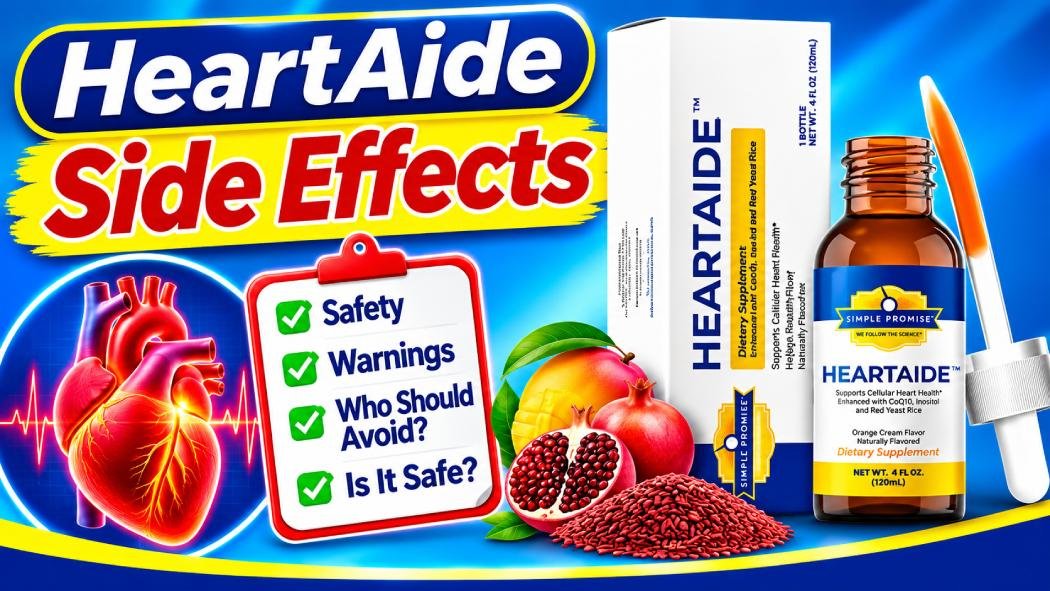
If you’re researching HeartAide side effects before ordering, you’re doing exactly what a careful buyer should do. HeartAide is a daily liquid dropper supplement from Simple Promise, positioned to support healthy cholesterol levels, healthy blood pressure, and overall cardiovascular wellness. Its formula combines red yeast rice, CoQ10, inositol, mango extract, and pomegranate extract.
Still, “natural” doesn’t automatically mean “right for everyone.” One of these ingredients, red yeast rice, contains a compound that works much like a prescription statin, which means it deserves the same respect.
In this guide, we look at the formulation, possible side effects, precautions, and overall safety, so you can decide whether HeartAide deserves a place on your shortlist. We’ll highlight what it does well and be clear about what research can’t tell us yet.
What Is HeartAide?
HeartAide is a dietary supplement made by Simple Promise, a U.S.-based supplement brand. According to published product information, it comes as a liquid with a dropper, the suggested serving is four droppers daily (ideally in the morning, in water or under the tongue), and each bottle provides about a 30-day supply. The brand recommends storing it in a cool, dry place and refrigerating it after opening, and it states that the product is made in cGMP-compliant facilities.
The formula is aimed at adults who want proactive support for cholesterol levels, blood vessel flexibility, and antioxidant protection, alongside a heart-healthy diet and activity. It is meant to complement medical care, not replace it. A liquid format makes the routine simple, with no capsules to swallow, and the brand backs the product with a 365-day money-back guarantee, which is unusually long for the category.
Interested in learning more about HeartAide? Visit the official website to explore its complete formulation and product details.
Does HeartAide Have Any Side Effects?
HeartAide is designed as a convenient liquid supplement for adults looking to support their cardiovascular wellness and maintain a healthy daily routine. Its formula combines ingredients such as Red Yeast Rice, CoQ10, Inositol, Mango Powder, and Pomegranate Extract, which are used in various nutritional and wellness products.
One positive aspect is that the manufacturer provides simple usage instructions, making it easy to incorporate the supplement into a daily routine. However, individual responses to supplements can vary depending on personal health conditions, ingredient sensitivity, and medication use.
Most importantly, Red Yeast Rice deserves special attention because it may contain monacolin K, a compound similar to prescription cholesterol-lowering medication. Other ingredients may occasionally cause mild digestive discomfort or interact with certain medicines.
Overall, HeartAide may be worth exploring for adults interested in nutritional support, provided they review the complete ingredient label and consult their healthcare professional before use.
Common HeartAide Side Effects
The possibilities below are based on the ingredients, not on documented reports about this exact product.
Digestive upset: Red yeast rice, inositol, CoQ10, and pomegranate can cause stomach discomfort, gas, or loose stools in some people. Taking the serving with food or diluted in water may help. Persistent symptoms are a reason to stop and call a clinician.
Muscle aches or weakness: Red yeast rice contains monacolin K, which is chemically identical to the statin lovastatin. Like statins, it can occasionally cause muscle pain, tenderness, or weakness, and in rare cases serious muscle breakdown. Unexplained muscle symptoms, especially with dark urine or fever, call for prompt medical attention.
Headache or dizziness: Red yeast rice has been linked to headaches in some users. Pomegranate and CoQ10 may lower blood pressure slightly, so people on blood pressure medication may feel lightheaded.
Liver effects: Statin-like compounds can raise liver enzymes in some people, and rare cases of liver injury have been reported with red yeast rice products. Dark urine, yellowing of the skin or eyes, or severe fatigue is a reason to stop and seek care.
Sleep changes: CoQ10 can occasionally cause trouble sleeping, particularly if taken late in the day, which is one reason a morning serving makes sense.
Allergic reaction: Mango can trigger reactions in people sensitive to mango, cashews, or poison ivy. Rash, itching, or swelling means stop immediately. Trouble breathing is an emergency.
HeartAide Ingredients and Their Possible Side Effects
The five ingredients below come from the product’s published ingredient information. Always compare them with the Supplement Facts panel on the bottle or the official site, since formulas can change.
| Ingredient | Intended Purpose | Potential Side Effects |
|---|---|---|
| Red yeast rice | Supports healthy cholesterol levels | Stomach upset, headache, muscle pain; rare liver or muscle injury; drug interactions |
| CoQ10 | Cellular energy and antioxidant support | Stomach upset, insomnia; may lower blood pressure |
| Inositol | Supports lipid metabolism and insulin sensitivity | Gas, nausea, loose stools at higher intakes |
| Mango extract | Polyphenol antioxidant support | Allergy in sensitive people; mild stomach upset |
| Pomegranate extract | Antioxidant and vascular support | Mild stomach upset; may add to blood pressure medicines |
Want to review the complete ingredient information before making a decision? Check the official HeartAide website for the latest product details.
Who Should Avoid Taking HeartAide?
HeartAide is intended for healthy adults, and several groups should speak with a clinician first or skip it.
Pregnant, breastfeeding, or trying to conceive: Red yeast rice acts like a statin and is not recommended in these situations.
People taking statins or other cholesterol-lowering medication: Combining them can raise the risk of muscle and liver side effects.
People taking blood thinners such as warfarin. CoQ10 and other ingredients may affect their action.
People with kidney disease: Statin-like compounds and possible citrinin contamination are relevant here.
People taking medicines that affect liver enzymes, including some antibiotics, antifungals, and transplant drugs, or who regularly eat large amounts of grapefruit.
People with low blood pressure or on blood pressure medication.
People with allergies to mango, cashews, pomegranate, or any listed ingredient.
People with a diagnosed heart condition or high cholesterol, who should stay under a doctor’s care.
Children and teens. Not intended for them.
How to Use HeartAide Safely
According to published product information, the directions are simple: take four droppers daily, preferably in the morning, either in a glass of water or under the tongue. Store the bottle in a cool, dry place, and refrigerate it after opening.
A few reminders:
- Follow the manufacturer’s directions and read the label on the bottle you receive.
- Don’t exceed four droppers daily. Higher intakes of statin-like compounds can strain the liver.
- Tell your doctor you’re taking it, especially if you have cholesterol or blood pressure tests coming up.
- Don’t combine it with a statin, or with other red yeast rice products, unless a doctor says so.
- Avoid alcohol around the time you take it, as the brand advises.
- Pair it with balanced meals and regular activity, since it is a supplement and not a replacement for either.
- Never stop or replace prescribed medication on your own.
- Check the warnings on the packaging, especially for pregnancy, medications, and health conditions.
How to Reduce the Risk of Side Effects
- Follow the official serving size, and don’t exceed it.
- Read the full ingredient list for any allergen.
- Tell your doctor or pharmacist about every medication and supplement you take.
- Avoid stacking it with other red yeast rice, niacin, or cholesterol supplements without guidance.
- Limit grapefruit and grapefruit juice unless your pharmacist says it’s fine.
- Ask about baseline liver tests if you plan to use it long term.
- Report unexplained muscle pain, dark urine, or yellowing skin right away.
- Stop use and seek medical advice if unexpected symptoms appear.
Is HeartAide Safe for Long-Term Use?
Long-term safety is an important consideration for anyone planning to use a cardiovascular supplement regularly. The manufacturer encourages consistent daily use and recommends taking HeartAide as part of an ongoing wellness routine.
However, the manufacturer’s suggested usage period does not establish that the complete formula has been independently tested for long-term safety.
Red Yeast Rice deserves particular attention because its monacolin K content can vary considerably between products. When significant amounts are present, it may produce the same types of adverse effects and medication interactions associated with lovastatin.
CoQ10, Inositol, Mango Powder, and Pomegranate Extract have their own safety considerations, which depend on their amounts and individual health circumstances.
The long-term safety of the finished HeartAide formula has not been established through independent clinical trials.
Anyone considering extended use should consult a healthcare professional, review the complete ingredient amounts, and periodically assess whether continued supplementation is appropriate.
👉 Visit the HeartAide Official Website to Verify Authenticity and Current Pricing
Is HeartAide Safe and Legit or Should You Avoid It?
HeartAide is a liquid dietary supplement designed for adults interested in supporting their cardiovascular wellness and maintaining a healthy lifestyle. Its formula combines five ingredients: Red Yeast Rice, CoQ10, Inositol, Mango Powder, and Pomegranate Extract. These ingredients have been studied individually for different aspects of general health and nutritional support.
One positive feature of HeartAide is its convenient liquid formula, which makes it easy to include in a daily wellness routine. The manufacturer also provides simple usage instructions and advertises a 365-day money-back guarantee, giving customers additional purchasing reassurance.
Another advantage is that the formula combines several recognizable ingredients rather than relying on a single nutritional component. CoQ10 and Pomegranate Extract, for example, are popular ingredients in antioxidant and cardiovascular wellness supplements.
Overall, HeartAide may be worth exploring for adults looking for additional nutritional support. However, buyers should pay particular attention to Red Yeast Rice because it may contain monacolin K, which has statin-like effects and potential medication interactions. Reviewing the complete ingredient amounts and consulting a healthcare professional before use can help customers make a more informed purchasing decision.
Final Verdict: Is HeartAide Worth Considering?
HeartAide combines red yeast rice, CoQ10, inositol, mango, and pomegranate in an easy liquid routine. The most relevant side effects to watch are mild digestive changes, headaches, and, because of red yeast rice, statin-like muscle and liver effects, along with possible interactions with statins, blood thinners, and other medicines.
The key safety steps are simple: follow the label, avoid it if pregnant or nursing, don’t combine it with a statin without your doctor, and speak with your doctor first if you take prescriptions or have a medical condition.
Its genuine strengths are a transparent ingredient list, ingredients with real research behind them, a simple routine, and an extended guarantee. It may suit healthy adults who want to support a heart-healthy lifestyle under appropriate guidance. Results vary, and no supplement is guaranteed to work.
Ready to learn more about HeartAide? Visit the official website to explore available packages, current pricing, and any promotional offers.
Frequently Asked Questions
Q. Does HeartAide have any side effects?
HeartAide contains Red Yeast Rice, CoQ10, and plant extracts. Depending on their amounts, these ingredients may cause digestive discomfort, muscle-related problems, allergic reactions, or medication interactions. Individual tolerance can vary.
Q. Is HeartAide safe to take daily?
The manufacturer recommends four droppers every morning. However, Red Yeast Rice may contain monacolin K, which has statin-like effects. Consult your healthcare professional before starting daily supplementation.
Q. Can HeartAide interact with medications?
It depends on the ingredients in your other supplements. Combining Red Yeast Rice with other cholesterol-support products may increase certain risks. Ask your healthcare professional to review your complete supplement routine.
Q. Who should not take HeartAide?
Pregnant or breastfeeding women, children, people on statins, and people with liver disease or allergies to its ingredients should avoid it unless a doctor says otherwise. People on blood thinners or blood pressure medication need medical approval first.
Q. Are there any long-term side effects of HeartAide?
The manufacturer encourages consistent daily use, but independent long-term safety evidence for the complete formula is limited. Discuss extended supplementation with your healthcare provider, particularly because of its Red Yeast Rice content.
Q. Is HeartAide worth trying?
It may be worth considering for healthy adults who want a simple liquid routine and are comfortable with the precautions above, particularly regarding red yeast rice. Review the label, talk to your doctor, and verify current guarantee terms on the official website before deciding.

✅ Click to Learn More About HeartAide
Affiliate Disclosure: Enewsread may earn a commission if you buy through links in this article, at no extra cost to you.