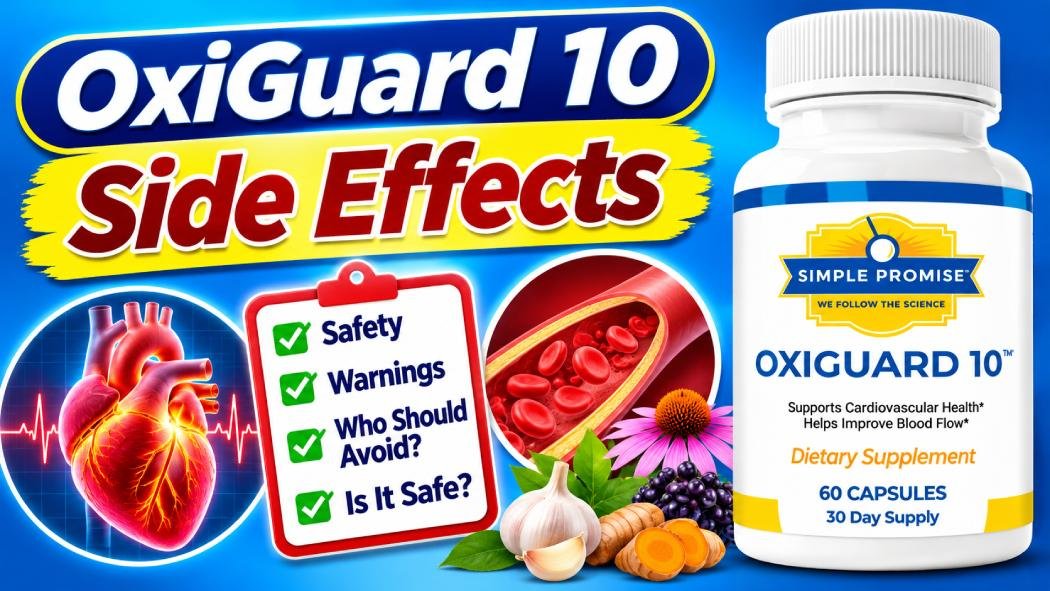
OxiGuard 10 is a daily capsule from Simple Promise, marketed for blood pressure, cholesterol, and heart and artery health. Because it is aimed at heart health, many shoppers want to know about OxiGuard 10 side effects and medicine interactions before they buy.
This safety review covers the ingredients, who should be careful, how to use it as directed, and what is still unknown about long-term use. The goal is clear, balanced facts to help you decide with more confidence today.
Interested in learning more about OxiGuard 10? Visit the official website to explore its complete formulation and product details.
Does OxiGuard 10 Have Any Side Effects?
According to its official website, OxiGuard 10 is made with natural ingredients and is designed for daily cardiovascular support. The manufacturer also describes its production standards, including GMP-compliant manufacturing facilities.
These are useful product details, but they do not guarantee that every person will tolerate the supplement without experiencing a reaction.
The formula contains several commonly used nutritional ingredients, including garlic, turmeric, elderberry, and vitamins. However, individual responses can vary depending on personal sensitivities, existing health conditions, and medication use.
Possible ingredient-related reactions may include stomach discomfort, nausea, diarrhea, allergic reactions, and changes in blood pressure. Garlic and turmeric supplements may also increase bleeding concerns in certain situations, particularly when combined with blood-thinning medication.
These are potential ingredient-related concerns rather than confirmed side effects of OxiGuard 10 itself. Independent clinical studies establishing the safety of the complete formula are currently limited.
OxiGuard 10 Ingredients and Safety
The official website lists gamma-glutamylcysteine-enriched garlic, Lactobacillus acidophilus, echinacea, turmeric with 95% curcuminoids, elderberry fruit extract, L-glutamine, vitamins C, E, and B6, and zinc.
Here are the main safety points:
Garlic: Garlic is commonly used in cardiovascular wellness supplements. However, concentrated garlic supplements may cause abdominal discomfort, gas, nausea, and body odor. They may also increase bleeding risk, especially when combined with anticoagulants or aspirin.
Turmeric: Usually fine for short periods, but concentrated, high-absorption curcumin products have been linked to liver injury in some people.
Echinacea: Allergic reactions can be severe in some people. NCCIH’s safety statements cover short-term use only.
Elderberry: Raw or unripe berries are a concern, and interactions with medicines are possible.
Zinc and vitamin B6: NIH sets adult upper limits of 40 mg zinc and 100 mg B6 per day from all sources. Without amounts, we cannot tell where this formula lands.
Want to review the complete ingredient information before making a decision? Check the official OxiGuard 10 website for the latest product details.
Who Should Avoid OxiGuard 10?
Talk to a doctor or pharmacist before using OxiGuard 10 if any of these apply to you:
- You are pregnant or breastfeeding. Turmeric supplements may be unsafe in pregnancy, and data on other ingredients is limited.
- You take blood thinners or aspirin, or you have surgery planned.
- You take any prescription medicine, including blood pressure or cholesterol medicine.
- You have liver problems.
- You are allergic to echinacea, garlic, or related plants.
- You take certain antibiotics or water pills, since zinc can interact with them.
- You are buying it for a child.
Never stop or replace prescribed heart medicine because of a supplement.
How to Use OxiGuard 10 Safely
According to the manufacturer’s instructions, the recommended serving is two capsules daily with approximately 6–8 ounces of water, preferably with a meal.
The official product information describes this as a simple daily routine for people interested in cardiovascular nutritional support.
For responsible use, consider these precautions:
- Follow the dosage instructions on the current product label.
- Never exceed the recommended daily serving.
- Take the capsules with sufficient water.
- Check the complete ingredient list before your first serving.
- Avoid combining multiple supplements containing overlapping vitamins and minerals.
- Discuss possible interactions with your doctor or pharmacist.
- Stop using the product and seek medical advice if you experience an unexpected reaction.
If you take prescription medication regularly, show the complete OxiGuard 10 label to your healthcare provider before introducing it into your routine.
Is OxiGuard 10 Safe for Long-Term Use?
Long-term safety is an important consideration for anyone planning to use a heart health supplement regularly. OxiGuard 10 is marketed as a daily nutritional formula containing antioxidants, vitamins, minerals, and herbal ingredients.
Some individual ingredients have known safety considerations. For example, excessive vitamin B6 supplementation over time may cause nerve damage, while high supplemental amounts of vitamin E may increase bleeding risks. Concentrated garlic and turmeric products may also interact with certain medications.
Anyone considering extended use should consult a healthcare professional, review the individual ingredient amounts, and periodically assess whether continued supplementation is appropriate.
👉 Visit the OxiGuard 10 Official Website to Verify Authenticity and Current Pricing
Is OxiGuard 10 Safe and Legit or Should You Avoid It?
OxiGuard 10 is marketed as a natural cardiovascular support supplement containing 10 nutritional ingredients, including garlic, curcumin, elderberry, echinacea, vitamins, minerals, and a probiotic.
There are some positive points worth considering. The manufacturer provides straightforward daily usage instructions, describes its GMP manufacturing standards, and offers a 365-day money-back guarantee according to its official sales page.
The formula also combines several recognizable nutritional ingredients that have been studied individually for different health-related purposes. Its two-capsule daily serving may appeal to adults who prefer a convenient supplement routine.
However, buyers should also consider some limitations. The individual ingredient amounts are not consistently disclosed across the available product pages. Furthermore, independent clinical evidence establishing the safety and effectiveness of the complete OxiGuard 10 formula is limited.
So, is OxiGuard 10 worth considering? It may be an option for adults interested in nutritional support for cardiovascular wellness, provided they review the complete product label and confirm that its ingredients are appropriate for their health needs.
Interested buyers can visit the official OxiGuard 10 website to check the latest product information, ingredients, dosage instructions, and purchasing details.
Frequently Asked Questions About OxiGuard 10 Side Effects
Q. Does OxiGuard 10 have any side effects?
OxiGuard 10 contains vitamins, minerals, and herbal ingredients that may cause digestive discomfort, nausea, allergic reactions, or other unwanted effects in some individuals. Personal tolerance can vary depending on dosage and medication use.
Q. Is OxiGuard 10 safe for daily use?
The manufacturer recommends two capsules daily with water, preferably with a meal. However, people with heart conditions, bleeding concerns, or those taking prescription medications should consult their healthcare provider before starting daily supplementation.
Q. Can I take OxiGuard 10 with other supplements?
Be careful. Garlic may affect bleeding, and zinc and vitamin B6 have upper limits. Check your other supplements for overlap, and ask a doctor or pharmacist before you combine any products.
Q. How long can I use OxiGuard 10?
The manufacturer recommends regular daily use, but independent long-term safety information for the complete formula is limited. Discuss extended supplementation with your healthcare provider before continuing.
Q. Who should avoid taking OxiGuard 10?
Pregnant or breastfeeding women, children, people on blood thinners or other prescriptions, those with liver problems, and anyone allergic to echinacea or garlic should avoid it unless a doctor approves.