
Best Foods for Healthy Skin: Walk into any pharmacy or beauty store and you will find hundreds of creams, serums, and treatments all promising glowing, youthful skin. The shelves are packed. The price tags are steep. And the results? Often disappointing.
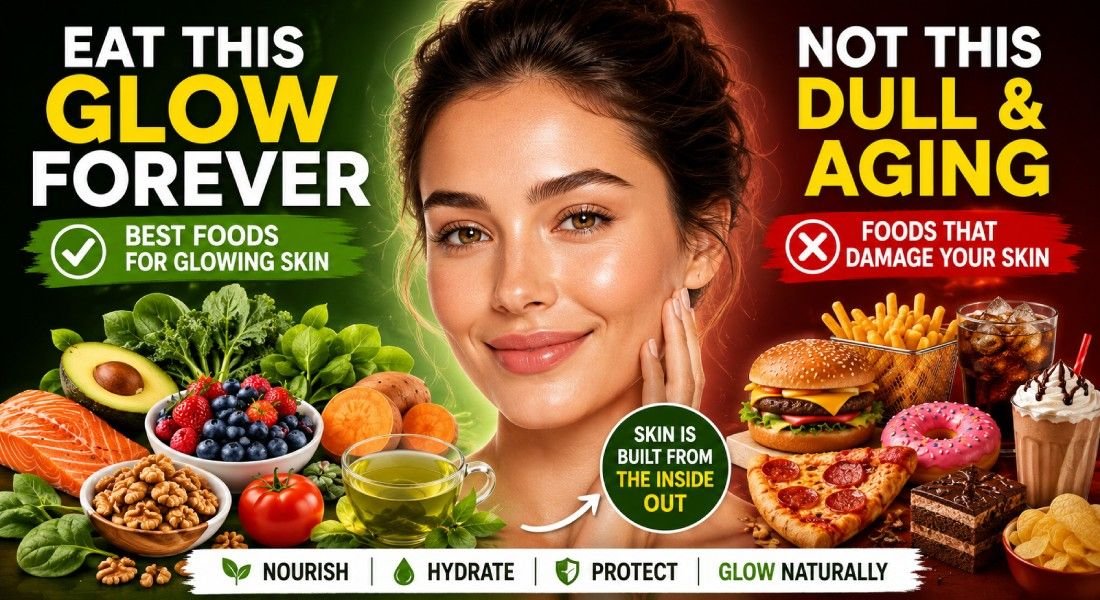
Here is what the beauty industry rarely tells you: your skin is built from the inside out. Every cell on your face was assembled using nutrients from food you ate weeks ago. No topical product can compensate for a diet that fails your skin.
The most reliable path to a genuinely glowing complexion is not in a jar. It is on your plate.
The Skin-Diet Connection: Why Food Is Your Best Skincare
Your skin renews itself roughly every 28 to 40 days. Old cells shed, new ones form, and the quality of those new cells depends entirely on the raw materials your body has available — vitamins, minerals, fatty acids, and antioxidants.
When those raw materials are abundant, you get skin that is firm, hydrated, and resilient. When they are scarce — or replaced by inflammatory junk — your skin becomes drier, duller, and more prone to breakouts and early aging.
Inflammation is the central thread connecting diet to skin. Shifting toward anti-inflammatory, nutrient-dense foods is one of the most powerful moves you can make for your complexion.
10 Best Foods for Healthy Skin and Glowing Face
1. Fatty Fish — The Ultimate Skin Food
Salmon, mackerel, sardines, and trout are packed with omega-3 fatty acids — specifically EPA and DHA — which are essential to how your skin is structured and how well it holds moisture.
Omega-3s keep cell membranes flexible and strong, locking moisture inside skin cells and keeping irritants out. When levels are low, the skin barrier weakens, leading to dryness, sensitivity, and inflammation.
EPA also helps regulate sebum production and reduces the inflammatory compounds behind redness and breakouts. Plus, fatty fish deliver high-quality protein, vitamin D, and selenium for full-spectrum skin support.
Aim for two to three servings per week. Plant-based? Algae-based omega-3 supplements are an excellent alternative.
2. Avocado — Healthy Fat and Vitamin E Combined
Avocado is rich in monounsaturated fats that support cell membrane integrity and help skin retain moisture naturally throughout the day.
It is also one of the best plant sources of vitamin E — a fat-soluble antioxidant that protects skin cells from UV and pollution damage. Vitamin E works even better alongside vitamin C, as the two antioxidants regenerate each other.
Avocados also provide biotin, folate, potassium, and lutein, all of which contribute to skin health in their own right.
High fiber content supports gut health too — and a healthy gut microbiome is increasingly linked to calmer, clearer skin. Half to one avocado daily is a simple, delicious habit.
3. Sweet Potatoes — Beta-Carotene for Natural Radiance
Sweet potatoes are one of the richest sources of beta-carotene, the plant pigment your body converts into vitamin A as needed.
Vitamin A regulates skin cell production and turnover — keeping skin fresh, preventing congestion, and reducing the dullness caused by dead cell buildup. It is the same compound dermatologists use in retinol treatments.
Beta-carotene also accumulates in the skin itself, acting as a mild natural sun filter and giving your complexion a warm, healthy glow that research consistently links to perceived attractiveness.
Other great sources include carrots, butternut squash, papaya, and mango. Always pair with a little fat to boost absorption.
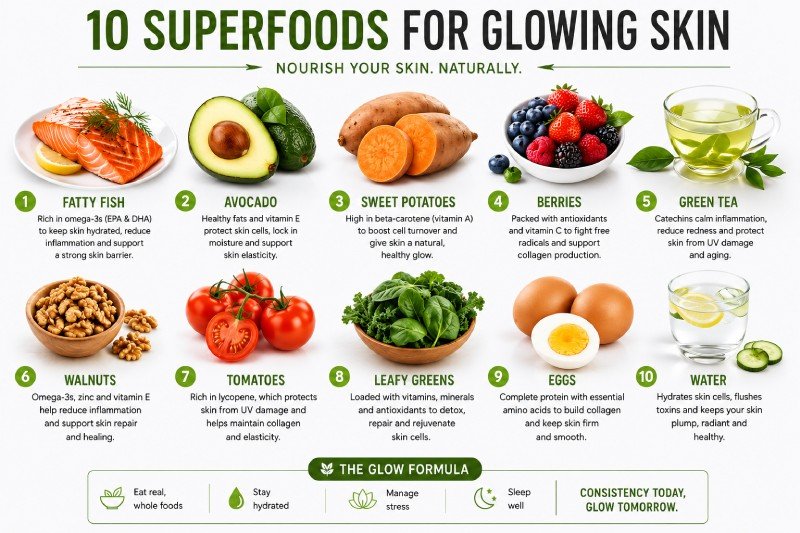
4. Berries — Antioxidant Defense Against Skin Aging
Blueberries, strawberries, raspberries, and blackberries are among the most antioxidant-rich foods you can eat. Their deep colors signal anthocyanins and polyphenols that neutralize free radicals before they damage skin cells.
Free radical damage is the primary driver of visible aging — fine lines, loss of firmness, uneven pigmentation, and a generally tired appearance. Berries are your frontline defense.
Strawberries also pack more vitamin C per cup than an orange. Vitamin C is essential for collagen synthesis and helps inhibit excess melanin production, gradually brightening skin tone over time.
One to two cups of mixed berries daily is all you need — fresh, frozen, blended, or stirred into oatmeal.
5. Green Tea — The Skin-Calming Drink
Green tea contains powerful antioxidants called catechins, with EGCG being the most studied. EGCG reduces UV-induced damage, calms skin inflammation, and can inhibit acne-causing bacteria.
Regular green tea drinkers show improved skin elasticity and reduced roughness in clinical studies, thanks to catechins protecting collagen from breakdown.
L-theanine in green tea also lowers stress-driven cortisol, which in turn reduces stress related breakouts and sebum overproduction.
Two to four cups daily is ideal. Brew just below boiling to preserve the most delicate antioxidants. Matcha provides an even higher catechin concentration.
6. Walnuts — The Most Skin-Friendly Nut
Walnuts are one of the few plant foods offering both omega-3 and omega-6 fatty acids in a relatively balanced ratio — important for keeping systemic inflammation in check.
They are also a meaningful source of zinc, a mineral that regulates oil gland activity, supports wound healing, and has demonstrated anti-inflammatory properties directly relevant to acne and skin sensitivity.
Vitamin E, selenium, and melatonin round out the profile — melatonin being an antioxidant that supports cellular repair processes overnight.
A small daily handful (around 28 grams) is all you need. Add to oatmeal, salads, or eat as a snack.
7. Tomatoes — Cooked for Maximum Lycopene
Tomatoes are one of the best dietary sources of lycopene — a carotenoid antioxidant that accumulates in skin tissue and provides meaningful protection against UV-induced oxidative damage.
Lycopene helps prevent the breakdown of collagen triggered by sun exposure and reduces inflammation at the cellular level. The key detail: cooking dramatically increases its bioavailability.
Tomato paste has roughly ten times more absorbable lycopene than raw tomatoes. Pair cooked tomatoes with olive oil to multiply absorption further, since lycopene is fat-soluble.
A simple tomato sauce with olive oil over pasta is genuinely one of the most skin-supportive meals you can make.
8. Dark Leafy Greens — The Multi-Nutrient Skin Foundation
Spinach, kale, Swiss chard, collard greens, and rocket deliver an impressive range of skin essentials in a single food group.
Vitamin C supports collagen production. Vitamin K reduces dark circles. Beta-carotene drives cell turnover. Folate fuels rapid skin renewal. Iron delivers oxygen to skin cells — deficiency shows up as pallor and grayness.
Kale and spinach are especially rich in lutein and zeaxanthin, which protect against UV damage and have been linked to better skin hydration and elasticity.
The chlorophyll in leafy greens also supports liver detoxification, helping clear the excess hormones that contribute to hormonal breakouts. Aim for two to three servings daily.
9. Eggs — Complete Protein for Skin Structure
Eggs contain all nine essential amino acids, including proline and glycine — the direct building blocks your body uses to synthesize collagen.
Collagen is the structural protein that keeps skin firm, plump, and resistant to wrinkling. Without a steady supply of these amino acids from food, collagen production slows regardless of other efforts.
Egg yolks also provide biotin, lutein, zeaxanthin, vitamin D, choline, and sulfur — which fuels glutathione production, the body’s master internal antioxidant.
Two to three whole eggs per day is a practical, nutritious target for most healthy adults. Cooking increases protein digestibility.
10. Water and High-Water Foods — The Foundation of Everything
Dehydrated skin looks dull, feels tight, and shows fine lines far more prominently. Hydration is the baseline everything else rests on.
Beyond drinking water, foods like cucumber (96% water), watermelon (92%), celery, oranges, and zucchini contribute significantly to daily fluid intake — along with vitamins, minerals, and antioxidants.
Coconut water is particularly useful, providing a natural electrolyte balance of potassium, magnesium, and sodium that helps skin cells hold onto water more effectively.
Aim for 2 to 2.5 liters of total daily fluid from all sources. Pale yellow urine is your best real-world hydration indicator.
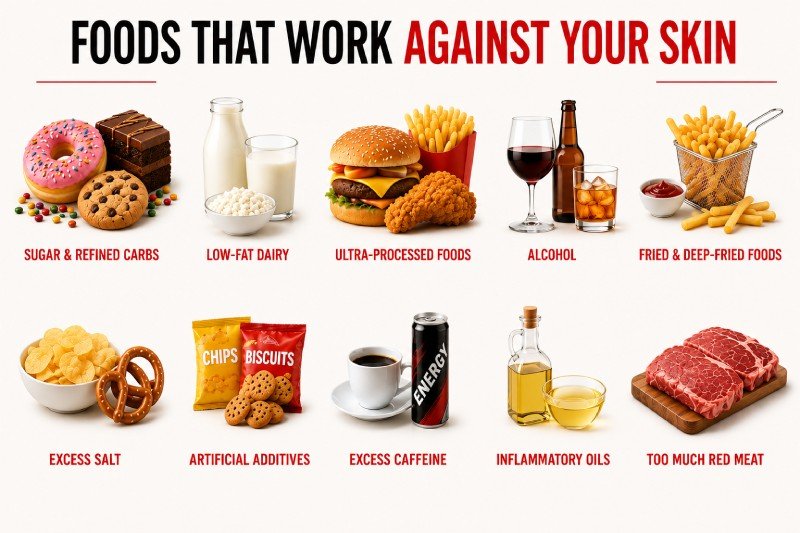
Foods That Work Against Your Skin
What you cut back on matters just as much as what you add. The biggest offenders:
Sugar and refined carbs — trigger glycation, stiffen collagen fibers, and consistently worsen acne.
Low-fat dairy — linked in multiple studies to acne through hormonal and IGF-1 pathways.
Ultra-processed foods — loaded with AGEs and inflammatory omega-6s that accelerate skin aging.
Alcohol — dehydrates skin, disrupts sleep (when repair happens), and depletes zinc and B vitamins.
Building Your Daily Skin-Glow Plate
You do not need a complicated protocol. Half your plate should be colorful vegetables. Add a quality protein source at every meal. Use healthy fats generously. Include berries daily. Drink green tea. Stay hydrated.
This is not a quick fix. Skin cells forming today will surface in four to six weeks. Consistency over months is what creates visible, lasting change.
The beautiful reality? This way of eating also improves your energy, mood, gut health, and long-term disease risk. Glowing skin is simply the visible reward for nourishing your whole body.
Feed your skin from within. The glow will follow.
Disclaimer: This article is for informational and educational purposes only. It is not a substitute for professional medical or dermatological advice. Consult a qualified healthcare provider before making significant dietary changes.