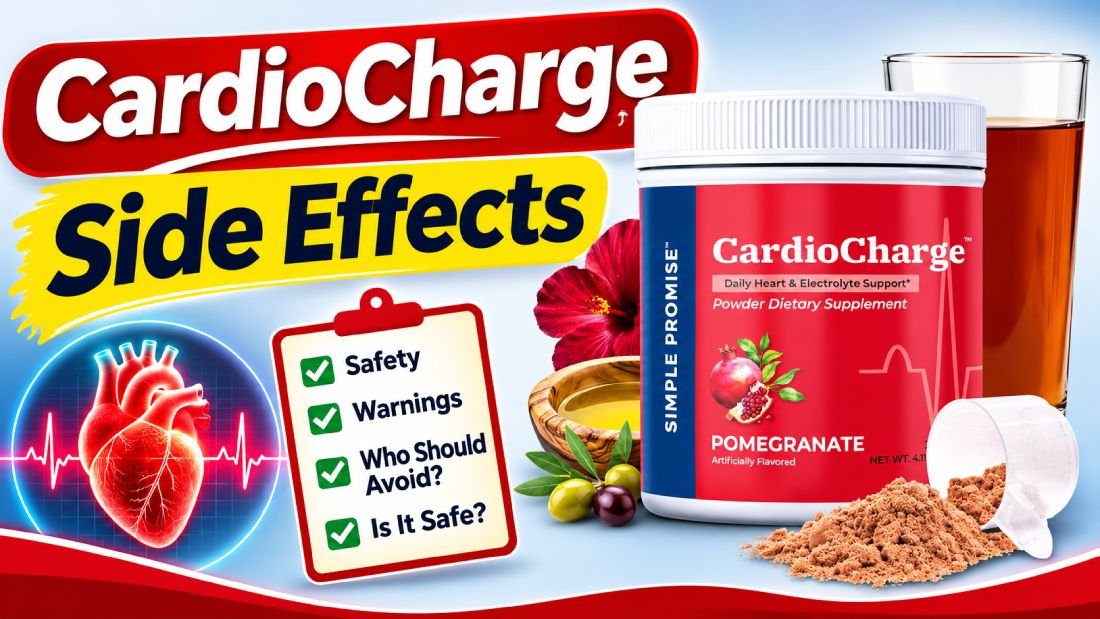
If you’re researching CardioCharge side effects before ordering, you’re asking the right question. CardioCharge is a caffeine-free, stimulant-free electrolyte powder from Simple Promise, positioned for everyday heart and circulation support. Its formula blends minerals with D-Ribose, hibiscus, glycine, and olive extract, and its label lists each ingredient at a specific amount, which is not something every supplement does.
Still, “natural” and “stimulant-free” don’t automatically mean “right for everyone.” Minerals, plant extracts, and amino acids can all affect the body, especially if you take medication or have a health condition. This guide walks through the formulation, possible side effects, precautions, and overall safety, so you can decide whether CardioCharge deserves a place on your shortlist. We’ll point out what it does well and be clear about what research can’t tell us yet.
What Is CardioCharge?
CardioCharge is a powder supplement made by Simple Promise, a U.S.-based supplement brand. The directions are straightforward: mix one scoop into a glass of water, preferably in the morning. Each jar holds 20 servings, and the brand suggests daily use for at least 90 days to judge how you feel. It describes the product as caffeine-free and stimulant-free, with a light pomegranate flavor.
The formula is aimed at adults who want hydration plus ingredients associated with healthy circulation, including people in midlife and beyond who want a simple daily habit. Per serving, the label lists 380 mg potassium, 190 mg magnesium, 140 mg sodium, 3,000 mg D-Ribose, 1,000 mg L-Glycine, 470 mg hibiscus extract, and 30 mg Hytolive® olive extract. Because each amount is disclosed, there is no hidden proprietary blend. The brand also backs the product with a 365-day money-back guarantee, which is unusually long for the category.
Interested in learning more about CardioCharge? Visit the official website to explore its complete formulation and product details.
Does CardioCharge Have Any Side Effects?
The manufacturer describes CardioCharge as a safe, stimulant-free formula and claims that it has no side effects. However, this is a marketing statement rather than independent clinical proof that every user will tolerate the product without problems.
The official website discusses several ingredients, including D-ribose, hibiscus extract, minerals, and glycine. Although these ingredients are used in nutritional products, individual responses can vary depending on health conditions, medication use, dosage, and personal sensitivities.
Some ingredients may affect blood pressure, blood sugar, or mineral levels. Therefore, possible concerns include digestive discomfort, changes in blood sugar, or interactions with certain medications.
There is currently insufficient publicly disclosed product-specific evidence to establish the frequency or severity of CardioCharge side effects. It is sensible to review the complete supplement label and consult a healthcare professional before starting.
Common CardioCharge Side Effects
The possibilities below come from the ingredients, not from documented reports about this exact product.
Digestive discomfort: Magnesium can loosen stools, especially in larger amounts, and D-Ribose can cause stomach upset or diarrhea in some people. Potassium citrate and citric acid can also bother sensitive stomachs. People with IBS or reflux may be more susceptible. Taking it with a full glass of water and with or after food may help, and persistent symptoms are worth a call to your clinician.
Light headedness: Hibiscus extract and olive extract have both been studied in relation to blood pressure. In people with already low or normal-low blood pressure, or those on blood pressure medication, this may show up as dizziness when standing. Anyone who feels faint should sit down and seek medical advice.
Blood sugar changes: D-Ribose has been associated with lowered blood glucose in some research, which mainly matters for people with diabetes or on glucose-lowering medication. Shakiness, sweating, or unusual hunger are the warning signs.
Electrolyte effects in people with kidney issues: Healthy kidneys handle the labeled amounts easily. People with reduced kidney function may have trouble clearing potassium and magnesium, which is why medical guidance matters for them.
Minor, harmless quirks: Beet root powder in the formula can tint urine or stool pink or red, which is harmless. It is not blood.
Allergic reaction: Any plant extract can trigger allergy in sensitive people. Hives, swelling, or trouble breathing is an emergency.
CardioCharge Ingredients and Their Possible Side Effects
The ingredients below come from the product’s Supplement Facts label. Always compare them with the label on the jar or the official site, since formulas can change.
| Ingredient (per scoop) | Intended Purpose | Potential Side Effects |
|---|---|---|
| D-Ribose (3,000 mg) | Supports cellular energy production | Stomach upset, loose stools; possible blood sugar lowering |
| Hibiscus extract, 4:1 (470 mg) | Traditionally used for circulation and blood pressure support | Lightheadedness, mild stomach upset; caution in pregnancy |
| L-Glycine (1,000 mg) | Amino acid supporting structural and relaxation pathways | Mild stomach upset or drowsiness in some people |
| Magnesium glycinate (190 mg) | Essential mineral for muscle, nerve, and heart rhythm function | Loose stools, cramping; caution in kidney disease |
| Potassium citrate (380 mg) | Electrolyte for fluid balance and muscle function | Stomach upset; high levels risky with kidney disease or certain drugs |
| Sodium citrate (140 mg) | Electrolyte for hydration | Minor for most; count it if sodium-restricted |
| Hytolive® olive extract (30 mg) | Olive polyphenol antioxidant | Mild stomach upset, headache (uncommon) |
Want to review the complete ingredient information before making a decision? Check the official CardioCharge website for the latest product details.
Who Should Avoid Taking CardioCharge?
CardioCharge is intended for healthy adults, and a few groups should speak with a clinician first or skip it.
Pregnant or breastfeeding women: Hibiscus has limited safety data in pregnancy, and professional guidance is advisable.
People with kidney disease: Potassium and magnesium can build up when kidneys don’t clear them well.
People with heart rhythm conditions or on heart medication: Electrolyte balance matters, so involve your cardiologist.
People with low blood pressure: Hibiscus and olive extract may lower it further.
Anyone on prescription medication: Especially blood pressure drugs, diuretics, or potassium-affecting medicines.
Children and teens: Not intended for them.
How to Use CardioCharge Safely
According to the brand, you mix one scoop into a glass of water, first thing in the morning. Filtered, tap, bottled, or carbonated water all work, and no special preparation is needed. The brand suggests using it daily for at least 90 days to evaluate how you feel, though that’s the brand’s guidance and not a guaranteed timeline.
A few reminders:
- Follow the label, and don’t exceed one scoop daily unless a healthcare professional tells you otherwise.
- Count electrolytes from other products, such as magnesium, potassium, or sports drinks.
- Take it with a full glass of water.
- Keep it as a supplement to a balanced diet and regular activity, not a replacement for either.
- Never replace prescribed heart or blood pressure medication with it.
How to Reduce the Risk of Side Effects
- Stick to the labeled serving size.
- Read the full ingredient list for allergens.
- Tell your doctor or pharmacist about every medication and supplement you take.
- Avoid stacking it with other electrolyte, magnesium, or potassium products without guidance.
- If you have diabetes or low blood pressure, monitor as your clinician advises.
- Introduce it gradually if your stomach is sensitive.
- Stop use and seek medical advice if unexpected symptoms appear.
Is CardioCharge Safe for Long-Term Use?
Long-term safety is an important consideration for anyone planning to take a heart health supplement every day. CardioCharge’s official website encourages continued use and discusses a period of approximately five to six months. However, this is a marketing recommendation, not proof that long-term daily use has been independently established as safe.
The available public information does not establish the long-term safety of the finished CardioCharge formula through independent clinical trials.
Individual ingredients may have different safety considerations depending on their amounts, the user’s health, and other medications. For this reason, anyone considering extended use should discuss it with a healthcare professional and periodically review whether continued supplementation is appropriate.
There is no need to assume that taking more or using the supplement longer will produce better results.
👉 Visit the CardioCharge Official Website to Verify Authenticity and Current Pricing
Is CardioCharge Safe and Legit or Should You Avoid It?
CardioCharge is marketed as a nutritional supplement containing seven ingredients associated with heart health and general nutrition. Its official website describes a one-scoop daily serving and claims manufacturing quality controls, including cGMP production and batch testing.
There are some positive points, including the disclosed ingredient names, straightforward usage instructions, and the manufacturer’s stated quality-control practices.
However, there are also limitations worth considering. The publicly accessible sales page does not provide individual ingredient quantities or sufficient product-specific clinical safety evidence. Its claim of zero side effects should not be interpreted as a medical guarantee.
So, is CardioCharge worth considering? It may be an option for adults interested in nutritional support, provided their healthcare professional considers its ingredients appropriate. Before purchasing, review the complete Supplement Facts label and ask questions about ingredient amounts and potential interactions.
If you are interested, visit the official CardioCharge website to review the latest product information before making a decision.
Final Verdict: Is CardioCharge Worth Considering?
CardioCharge pairs everyday electrolytes with D-Ribose, hibiscus, glycine, and olive extract in an easy morning drink. The most relevant side effects to watch are mild digestive changes, lightheadedness, and blood sugar or blood pressure effects, along with electrolyte caution for people with kidney issues or certain medications. The key safety steps are simple: stick to one scoop, read the label, check with your doctor if you take prescriptions, and avoid it if pregnant or nursing without guidance.
Its genuine strengths are ingredient transparency, a stimulant-free formula, a straightforward routine, and an extended guarantee. It may suit healthy adults who want to support a balanced lifestyle. Results vary, and no supplement is guaranteed to work.
Ready to learn more about CardioCharge? Visit the official website to explore available packages, current pricing, and any promotional offers.
Frequently Asked Questions
Q. Does CardioCharge have any side effects?
The manufacturer claims CardioCharge has no side effects, but independent product-specific safety evidence is limited. Some ingredients may affect blood sugar, blood pressure, or mineral levels. Individual reactions can vary depending on dosage and health conditions.
Q. Is CardioCharge safe to take daily?
It’s designed for daily use at one scoop, and many healthy adults tolerate its ingredients well. However, long-term finished-product studies aren’t available. Check with your doctor if you have a health condition, take medication, or plan to use it for months.
Q. Can CardioCharge cause stomach problems?
Possibly. Magnesium and D-Ribose can cause loose stools or stomach upset in some people, particularly if you take more than directed. Mixing with a full glass of water and following the label may help. Persistent symptoms should be checked.
Q. Can CardioCharge interact with medications?
Yes, in theory. Ingredients may add to the effects of blood pressure medicines or diuretics, affect potassium levels alongside certain drugs, or influence glucose-lowering medication. Anyone on prescriptions should consult a doctor or pharmacist before use.
Q. Who should not take CardioCharge?
Pregnant or breastfeeding women, children, and people with allergies to its ingredients should avoid it. People with kidney disease, low blood pressure, diabetes, or heart conditions, or those taking medication, need medical approval first.
Q. Is CardioCharge worth trying?
It may be worth considering for healthy adults who want a simple, transparent, stimulant-free electrolyte routine and are comfortable with the precautions above. Review the label, talk to your doctor, and verify current guarantee terms on the official website before deciding.