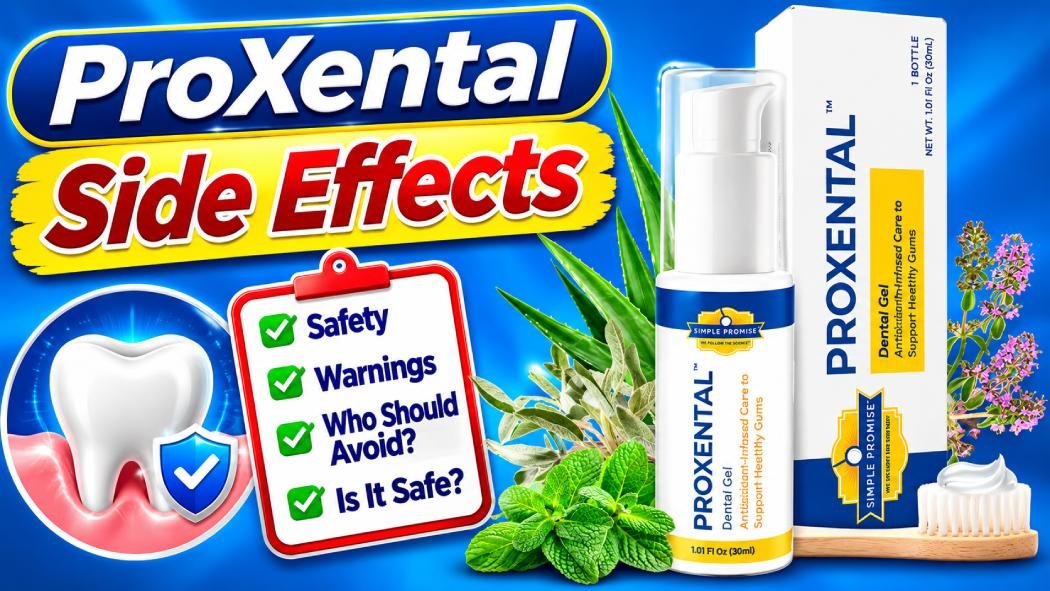
ProXental is a dental gel, described on its website as a topical oral serum. You rub a small amount onto your gums and teeth twice a day. Because it goes right into your mouth and contains active plant ingredients like clove and sage, many shoppers search for ProXental side effects before buying.
This safety review covers the ingredients, who should be careful, how to use it as directed, and what is still unknown about long-term use. The goal is clear, balanced facts.
Interested in learning more about ProXental? Visit the official website to explore its complete formulation and product details.
Does ProXental Have Any Side Effects?
No oral care product is free of side effects, and ProXental is no exception. The official page does not list any side effects or warnings. Some ProXental reviews call side effects rare and mild, but we could not find independent testing of the finished product to confirm that. Treat those claims as marketing, not proof.
What we can review is the ingredient list. Mouth and gum tissue is sensitive. Clove can irritate gums, and peppermint and menthol can cause irritation in some people. Anyone with an herb or essential oil allergy should be extra careful. Sage and clove also carry cautions for certain groups, covered below.
If you notice burning, swelling, or a rash, stop using the gel and talk to your dentist or doctor.
ProXental Ingredients and Safety
The official website identifies 10 ingredients in ProXental, combining three main ingredients with seven additional components. These ingredients are selected to support oral freshness, gum comfort, and everyday dental hygiene.
Here are some important safety considerations for each ingredient:
Sage (Salvia Officinalis): Sage is a traditional botanical ingredient used in oral-care preparations. It contains natural compounds that have been studied for their oral hygiene properties. However, concentrated sage preparations may cause sensitivity in some individuals. People with known sage allergies should review the product label before use.
Clove (Eugenia Aromatica): Clove is traditionally used in dental care because of its eugenol content. It is associated with a soothing sensation in some oral-care preparations. However, concentrated clove oil may cause irritation or allergic reactions in sensitive individuals.
Ferulic Acid: Ferulic acid is a plant-derived antioxidant found naturally in foods such as apples and grains. It is used in various wellness and cosmetic formulations. Although it is generally well tolerated in many topical applications, individual sensitivity or irritation is possible.
Aloe Vera: Aloe vera is known for its soothing and moisturizing properties. It is commonly used in skin and oral-care products. Some people may experience allergic reactions or irritation, particularly if they are sensitive to aloe-based preparations.
Sodium Chloride: Sodium chloride is commonly known as salt and is frequently used in oral hygiene preparations. It can help create a cleansing environment, although concentrated salt solutions may temporarily irritate sensitive oral tissues.
Cucumber (Cucumis Sativus): Cucumber is valued for its refreshing and moisturizing properties. It is generally well tolerated in topical formulations, although allergic reactions are possible in people with specific sensitivities.
Peppermint: Peppermint provides a refreshing flavor and cooling sensation. However, peppermint flavoring is a recognized potential trigger of oral contact sensitivity. Sensitive individuals may experience irritation, redness, or discomfort.
Menthol: Menthol provides the familiar cooling sensation found in many oral-care products. Most people tolerate it in appropriately formulated products, but excessive sensitivity may cause burning, irritation, or an uncomfortable sensation.
Xylitol: Xylitol is a sugar alcohol commonly used in dental products because it helps maintain a tooth-friendly environment. It is generally well tolerated in oral-care applications. However, consuming large quantities may cause digestive discomfort.
Thyme: Thyme is a botanical ingredient traditionally used in oral hygiene preparations. Its natural compounds have been studied for antimicrobial properties. Concentrated thyme extracts or oils may cause irritation or allergic reactions in sensitive individuals.
Overall, these ingredients have different properties and potential safety considerations. Their natural origin does not automatically guarantee that every person will tolerate the finished formula.
Want to review the complete ingredient information before making a decision? Check the official ProXental website for the latest product details.
Who Should Avoid ProXental?
Talk to a doctor, dentist, or pharmacist before using Pro Xental if any of these apply to you:
- You are pregnant or breastfeeding. Sage and clove have limited safety data for these times.
- You plan to use it on a child. Clove is considered unsafe by mouth for children.
- You have a bleeding disorder, take blood thinners, or have surgery planned.
- You take diabetes medicine.
- You are allergic to herbs, mint, or essential oils.
- You have bleeding gums, pain, or very sensitive teeth that do not improve.
Any of these can call for a dental exam, not just a topical gel. When in doubt, ask first.
How to Use ProXental Safely
The official page says to apply a pea-sized amount to your upper and lower gums, using a fingertip or a soft-bristled toothbrush. It takes about 20 seconds. Use it twice a day, morning and night. The page does not name a maximum amount or a maximum length of use, so do not use more than directed.
A few simple habits help:
- Wash your hands before applying.
- Do not swallow the gel.
- Keep it away from children and pets.
- Keep brushing, flossing, and seeing your dentist.
- Stop use if your gums burn, swell, or bleed more.
Is ProXental Safe for Long-Term Use?
ProXental is designed to fit easily into a regular oral-care routine, making it a convenient option for adults who want to maintain healthy gums and support everyday dental hygiene. Its formula combines 10 ingredients, including Aloe Vera, Sage, Xylitol, Peppermint, and Thyme, which are commonly used in oral-care and personal hygiene products.
One advantage of ProXental is its simple application process. The manufacturer recommends using a pea-sized amount twice daily, allowing users to incorporate it into their morning and evening routines without making major lifestyle changes.
For continued use, individual tolerance is important. Most ingredients are familiar in oral-care formulations, but people with sensitive gums or allergies to peppermint, menthol, or clove should review the label carefully. Independent long-term safety studies of the complete formula are limited.
Overall, ProXental may be worth considering as part of a consistent oral hygiene routine, provided it suits your needs. Regular dental checkups and advice from your dentist can help you decide whether continued use is appropriate.
Is ProXental Safe and Legit or Should You Avoid It?
ProXental appears to be a real product from Simple Promise, with a working official website. The site names all 10 ingredients, lists a support phone number, includes the standard FDA disclaimer, and says the product is made in the USA in a GMP-certified facility. Those are points in its favor.
Our balanced view: ProXental may be worth considering as an add-on to your normal dental care if you are a healthy adult with none of the risk factors above. To read more about ProXental side effects from the maker, check current ingredients, pricing, and purchasing details on the official ProXental website.
Final Verdict: Should You Be Concerned About ProXental Side Effects?
ProXental may be worth considering for adults looking to add an easy-to-use oral-care product to their daily dental hygiene routine. Its formula combines 10 ingredients, including Aloe Vera, Sage, Clove, Peppermint, Thyme, and Xylitol, which are commonly used in oral-care and personal hygiene products.
One of the appealing features of ProXental is its convenient gel format. The manufacturer recommends applying a small amount twice daily, making it easy to include in your morning and evening routines. The company also advertises a 365-day money-back guarantee, offering additional purchasing reassurance.
Most people can evaluate its suitability by checking the ingredient list and considering their individual sensitivities. Although some ingredients may cause irritation or allergic reactions in sensitive individuals, these concerns do not necessarily mean everyone will experience problems.
Overall, ProXental is worth exploring as an addition to everyday oral hygiene, provided its ingredients are suitable for you. For the best experience, continue regular brushing, flossing, and dental checkups. Visit the official ProXental website to review the latest product information and purchasing details.
👉 Visit the ProXental Official Website to Verify Authenticity and Current Pricing
Frequently Asked Questions About Pro Xental Side Effects
Q. Does Pro Xental have any side effects?
Pro Xental contains botanical extracts and flavoring ingredients that may cause irritation or allergic reactions in sensitive individuals. Peppermint, menthol, and clove-derived compounds are among the ingredients worth checking before use.
Q. Is ProXental safe for daily use?
The directions call for twice-daily use, but daily safety is not backed by studies on the finished gel. Follow the label, never use more than directed, and watch your gums. Ask your dentist if you have concerns.
Q. Can I take Pro Xental with other supplements?
It is used in the mouth, but clove may affect clotting and blood sugar. Ask a doctor first if you take blood thinners, diabetes medicine, or supplements like garlic, ginger, or ginkgo.
Q. How long can I use ProXental?
The manufacturer recommends consistent morning and evening application. However, independent long-term safety studies of the complete formula are limited. Monitor your gums and consult your dentist if irritation develops.
Q. Who should avoid taking Pro Xental?
Pregnant or breastfeeding women, children, people with bleeding disorders or on blood thinners, and anyone allergic to herbs or essential oils should avoid it unless a doctor approves. Swallowing it is not advised.